
Our work
Things we’ve put into practice.
Products and digital experiences we’ve designed, built and shipped ourselves. We still run all three, and each is evolving in beta.
Travel product · Beta
Preflight Advisor
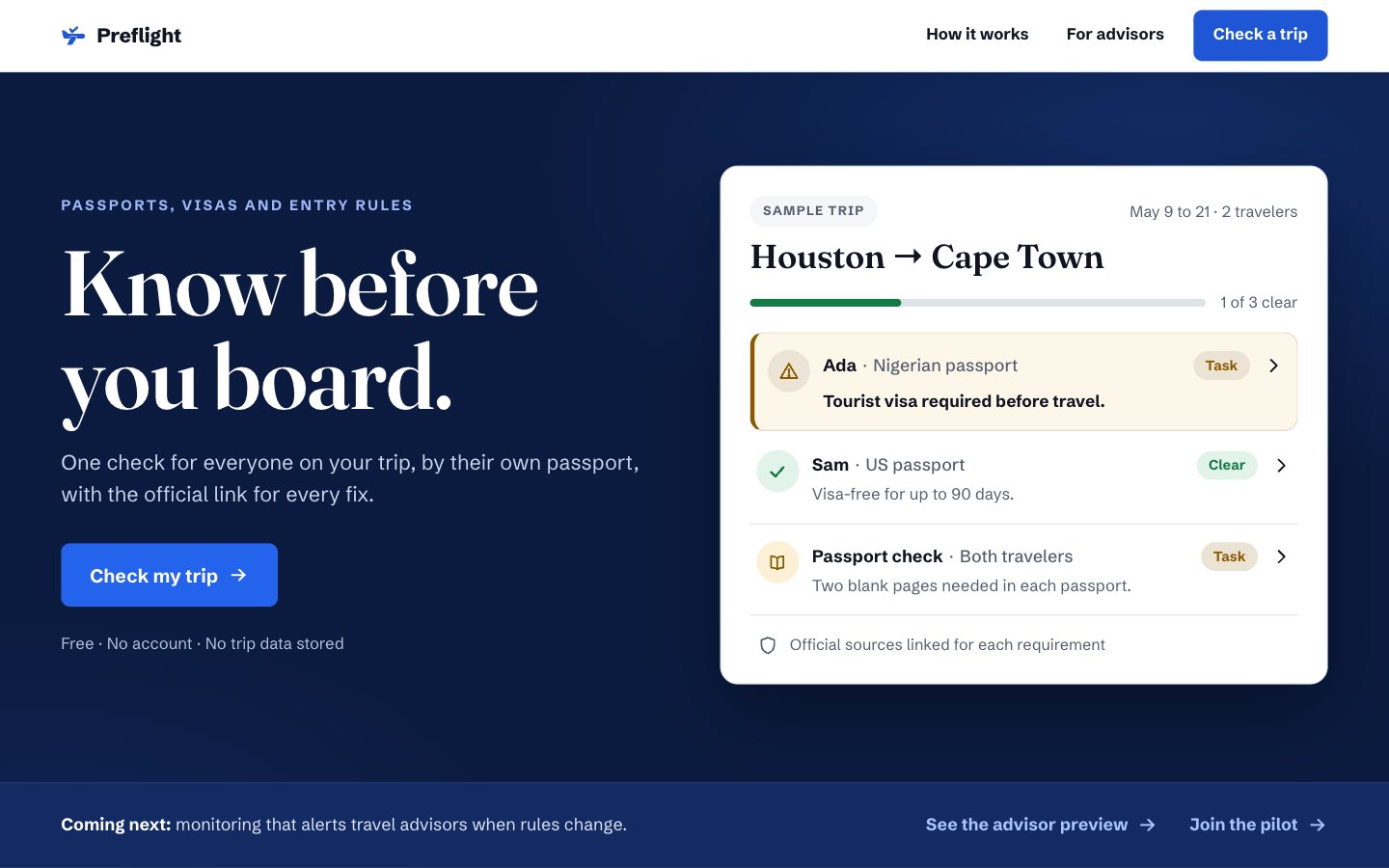
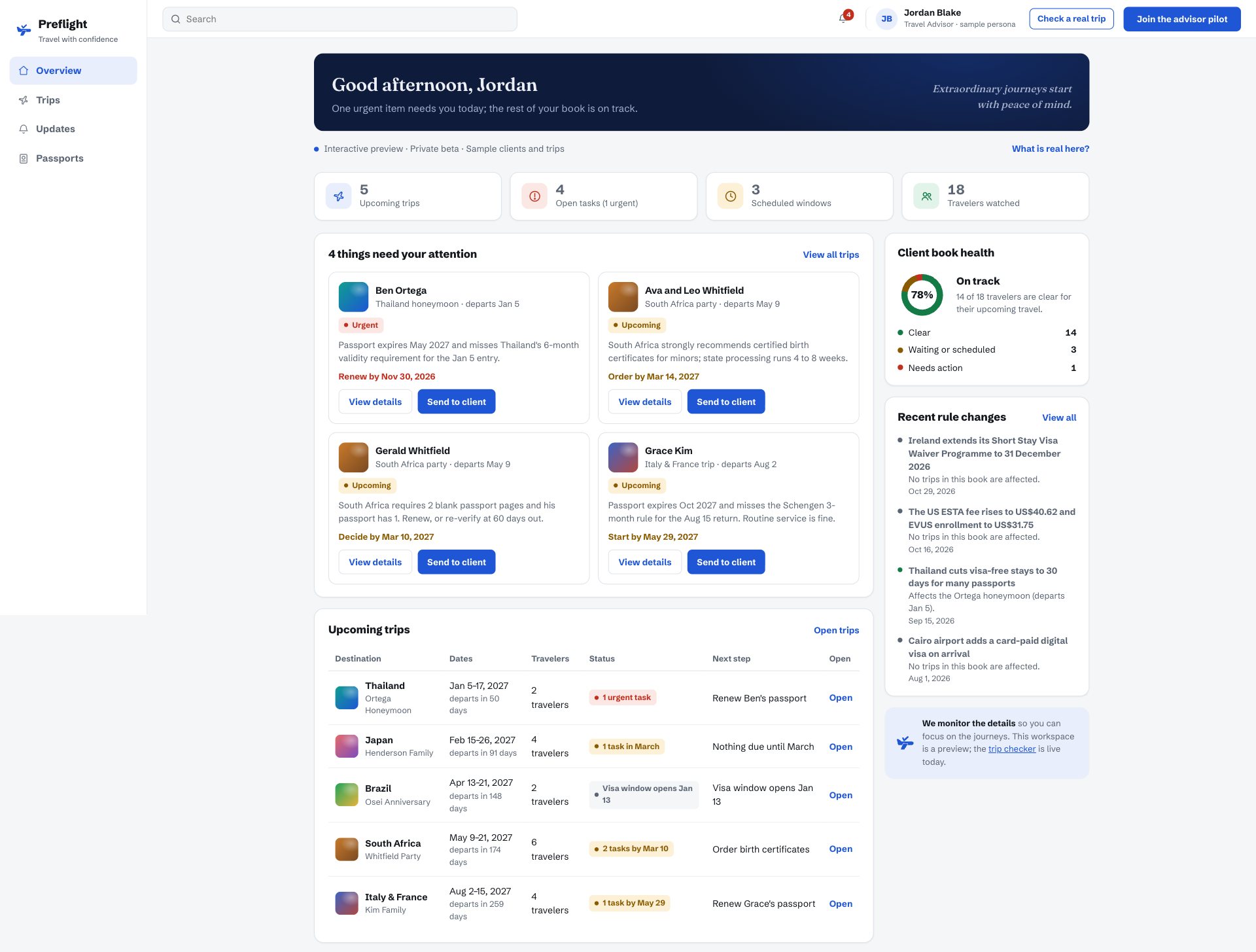
Passport, visa and entry requirements for everyone on a trip, each checked by their own passport. Free for travelers today, and growing into monitoring for travel advisors.
- Free to use
- 62 destinations
- Rules re-verified weekly
- No trip data stored
The problem
Planning a group trip, we found every traveler needed something different. Passport validity, visas and entry forms depend on nationality, and the official answers are scattered across government websites.
What we decided
Check everyone on a trip in one pass, each by their own passport. Point every finding to the official government page, never a paid lookalike. Store no trips, so there is no account or trip history to protect. And say plainly what it can’t do: it checks today’s rules, and every result shows which version it used.
What we built
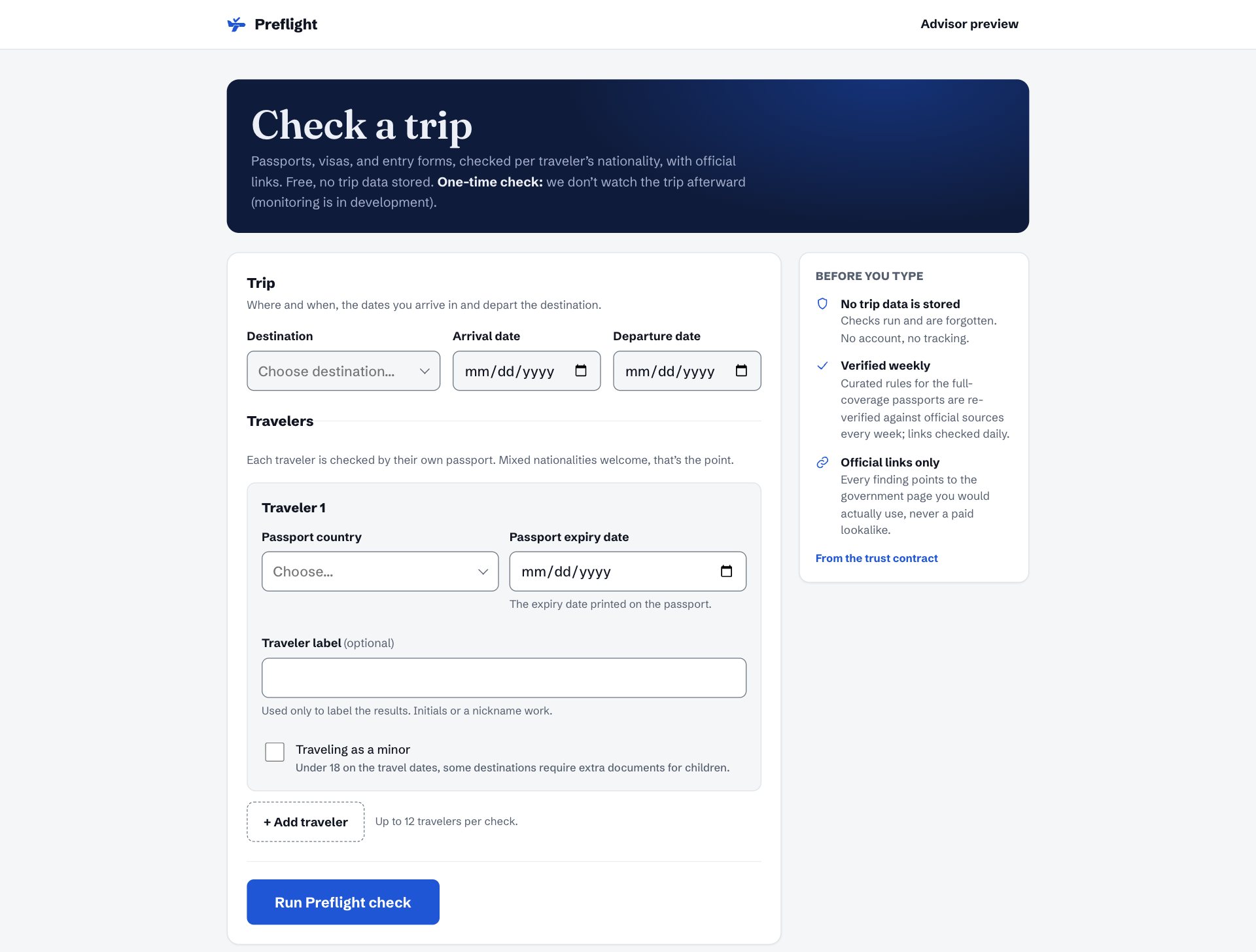
A web application covering 62 destinations. Visa rules for ten passports, including US, UK, Indian and Nigerian, are verified by hand and re-verified weekly against official sources, with links checked daily. Other nationalities are covered from open community data, clearly labeled in results. Passport validity is calculated to the day against the actual travel dates, and each task gets a date to start by, worked out from the official processing time, including when to renew a passport before applying for a visa.
Where it is now
The one-time trip check is free and open to anyone, with no account needed. Monitoring for travel advisors, which re-checks every client trip and sends an alert when a rule changes or a deadline comes up, is in development, with a free pilot for founding advisors.
Join the advisor pilot (opens in a new tab)Agentic AI product · Beta
Fate Check
Enter a website address. A few minutes later you have the fixes a product manager and an engineer would make first, each backed by evidence from the site itself, and a picture of what your homepage could look like once they are made.
- Draws a new first screen
- Every finding cites evidence
- Read-only
- Reports deleted after 30 days
The homepage now, and what it could be
Now

A slogan over a photo. Nothing on the first screen says what the company does or how to get in touch.
Concept

- Says what the company does The headline names the services instead of only a slogan.
- A way to get in touch up top A “Request a quote” button sits in the header and beside the headline.
- Proof, stated carefully Facts are shown plainly, and a certification is marked as the company’s own statement until a certificate is shown.
The problem
Generic AI advice about a website sounds confident without checking the site itself, and a list of fixes is easy to nod at and ignore. We wanted a first look where every fix can be traced back to evidence, and where the owner can see the result.
What we decided
Tools measure; the model judges. A reviewer step drops findings the evidence does not support, and code rejects any finding that does not cite a successful tool result. The concept may only use what is already on the site, so it cannot invent a brand or a claim.
What you get
A summary written for the owner: the homepage now beside the concept, five scores asked as plain questions, and the top five fixes as everyday actions. The full report, with the measurements and screenshots behind every point, is one click away and saves as a PDF.
How the audit works
A lead agent reads the homepage and plans the investigation, then three specialists work in parallel: product and content, experience and accessibility, technical and security. Lighthouse, axe-core, header, TLS, DNS and link checks and screenshots do the measuring.
How the concept is drawn
Code collects the site’s logo, pictures, colors, fonts and wording. The model designs a new first screen from those alone, sees it rendered on a desktop and a phone, and revises it once. A separate check then asks whether it is clearly better, on brand and unbroken. Anything short of yes, and the report carries no picture.
Tested before trusted
Against nine test sites with known planted problems, it found 10 of 10, and 15 of 16 findings matched something planted. A test site that tries to instruct the auditor through its own content had no effect on the scores. The audit pictured above took a little over two minutes and cost 37 cents, concept included.
Safe to run in public
Every browser request is vetted against private addresses. It is read-only, identifies itself as FateCheckBot and respects robots.txt. A per-visitor limit and a hard daily spend cap keep it affordable.
Built on
TypeScript and React, on AWS (CloudFront, API Gateway, Lambda, SQS, DynamoDB, S3) defined in Terraform, deployed from GitHub Actions with OIDC. Claude powers the agents.
Where it is now
Live in private beta behind an access password. It is an automated first look, not a full audit. Ask us for access to run it on your own site.
Healthcare product · Beta
SiteRounds
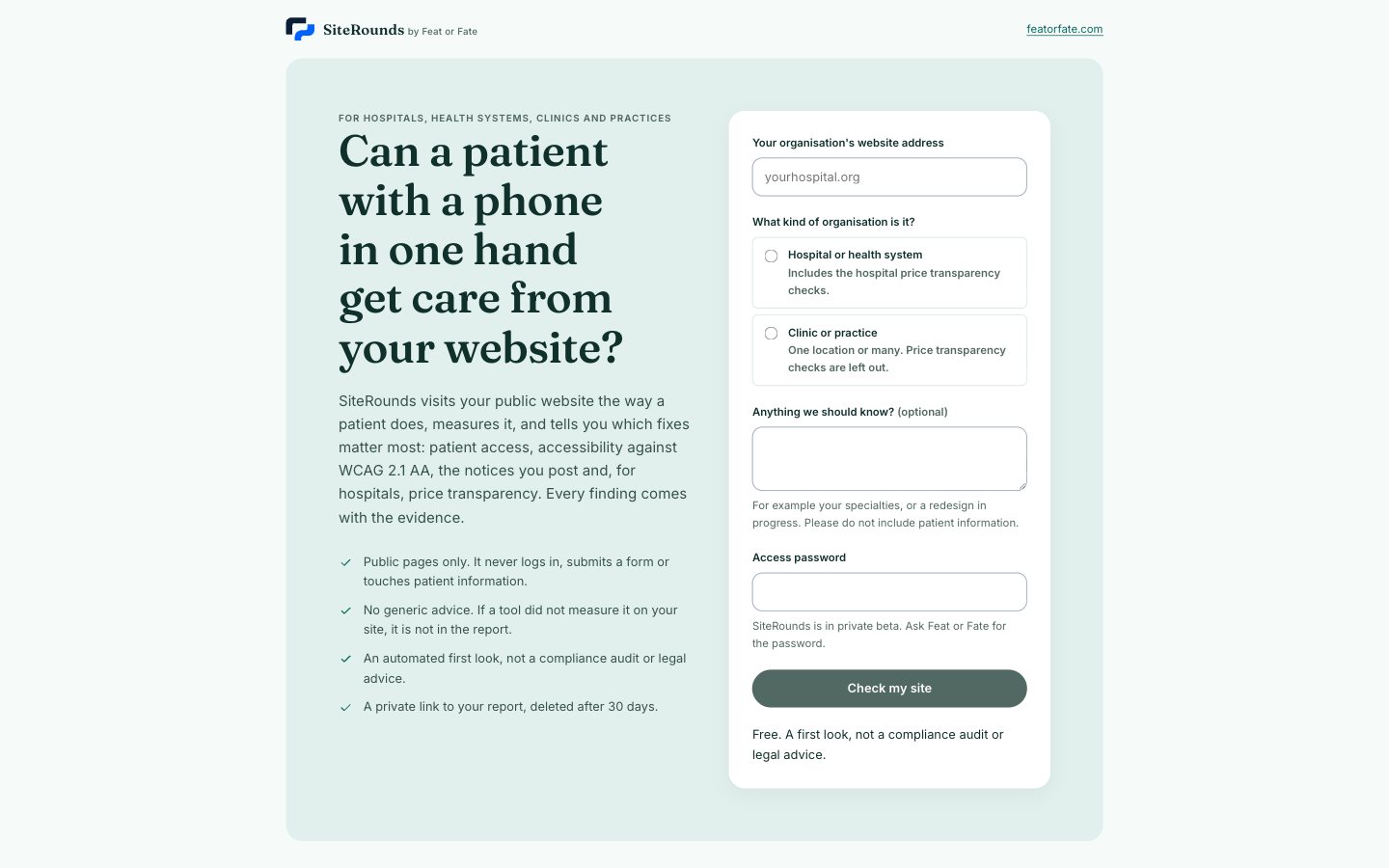
An automated first look at a hospital, clinic or practice website: it visits the public pages the way a patient would and ranks the fixes that matter most, each backed by evidence.
- Five areas, scored
- Every finding cites evidence
- Public pages only
- No patient data
The problem
A healthcare website answers to patients in a hurry and to rules about accessibility, notices and pricing. We wanted a first look that keeps what was measured apart from what is assumed, for the people who run the site.
What we decided
Report what was observed and which requirement it relates to, and never say a site is or is not compliant. Anything that stops a patient reaching care is ranked first. It is not a compliance audit or legal advice, and says so.
What we built
Five scored areas: patient access on a phone and a desktop, accessibility against WCAG 2.1 AA, required notices, speed, links and security and, for hospitals only, price transparency. An orchestrator picks the pages that matter and four specialists work in parallel; a reviewer drops anything the evidence does not support.
Tested before trusted
Against eight fictional healthcare sites, it found 8 of 8 planted problems, all 12 findings matched something planted, and the two control sites produced none. A page instructing the auditor to report full compliance had no effect and was reported as a finding. Audits averaged 46 seconds and 20 cents. These are small test sites, one run each: they show the pipeline works, not an accuracy figure for real websites.
Safe around patient care
It reads public pages only. It never logs in, opens a patient portal or submits a form, and only makes read-only requests. It identifies itself as SiteRoundsBot and respects robots.txt. Daily limits and a spend cap apply, and reports are deleted after 30 days.
Built on
Seeded from Fate Check’s code, now its own codebase. TypeScript and React, on AWS (CloudFront, API Gateway, Lambda, SQS, DynamoDB, S3) defined in Terraform, deployed from GitHub Actions with OIDC. Claude powers the agents. The rules it cites were checked against the federal regulations and CMS.
Where it is now
Live in private beta behind an access password. It is an automated first look, not a compliance audit or legal advice. Ask us for access to try it.
Let’s talk
What are you working on?
An idea, an existing product, or a problem that needs untangling. You’ll work directly with the founders.